54B, Tailstoi Town 5238 MT, La city, IA 522364



Doxwell & Rehabilitation Clinic focuses on maintaining health for people of all ages, helping patients pain and prevent disease.

Sports Genomics: A Secret Weapon In sports, everyone’s got their own secret weapon—some swear by their lucky socks, others by a quirky pre-game routine. But what if we told you the real game-changer might be hiding in your DNA? Sports genomics is here to give you an edge, and trust us, it’s way cooler than lucky socks. Genetics and Performance: Your Built-in Playbook Imagine your DNA as a secret coach who knows exactly how to boost your performance. It’s not about helping you ace your exams; it’s about helping you smash your personal best. Your genes can influence everything from how fast you sprint to how long you can endure. Think of them as your personal playbook, guiding you to greatness. Injury Prevention: Your DNA’s Hidden Shield Injuries are the unwelcome plot twists in your athletic journey. Good news: your DNA might hold the key to avoiding them. By understanding your genetic risks, you can tweak your training to dodge those painful setbacks. It’s like having an invisible shield—only instead of deflecting lasers, it’s keeping you off the injury list. The Future of Sports Genomics: Pushing the Limits As athletes increasingly unlock their genetic data, the game is set to change dramatically. Sports genomics is like having a top-tier upgrade for your training regimen—it won’t magically turn you into an overnight champion, but it will definitely sharpen your edge. Keep in mind, though, that even with these advanced insights, dedication and hard work remain key. There’s no quick fix for reaching the top. The Complete Solution: It’s Science, Not Magic Let’s set the record straight—sports genomics isn’t a magic wand for instant success. It’s a powerful tool, but like any tool, it’s only as good as the effort you put into using it. Combine these genetic insights with solid training and expert advice, and you’ll be well on your way to reaching your goals. Even Batman needed a little help from Alfred, after all! Conclusion Sports genomics is your ticket to unlocking hidden potential and staying ahead of the game. While it won’t replace the need for hard work and dedication, it can give you the insights you need to train smarter and achieve your best. Ready to see what your DNA has in store? Dive into sports genomics and take your game to new heights!
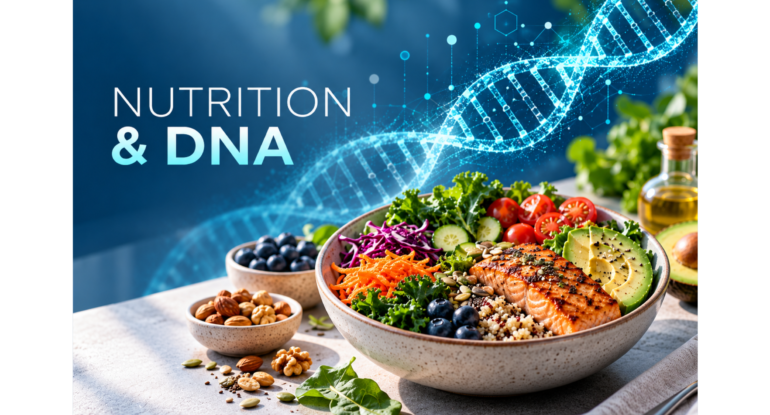
DNA and your Nutritional challenges Life today is like a high-speed roller coaster—one minute you’re in one city, the next in another, juggling work, family, and everything in between. Amidst all this, trying to maintain a balanced diet can feel like hunting for a needle in a haystack. You’ve got all sorts of advice thrown at you, from fad diets to miracle supplements, but how do you know what really works for you? Here’s where things get interesting: What if the secret to your perfect diet isn’t hidden in the latest health magazine, but in your very own DNA? Yes, your genes might hold the key to why you crave that extra slice of pizza or struggle with those stubborn pounds. Enter Nutrigenomics: Your DNA’s Personal Chef Imagine your DNA as a wise old chef who knows exactly what ingredients your body needs to thrive. Nutrigenomics is the science that helps you decode these genetic recipes. It’s like having a personalised nutritional guide that cuts through the noise of generic advice. Here’s the lowdown: Genetic Variability: About 30% of your diet response is shaped by your genes. So, while your friend might thrive on a high-carb diet, your DNA could be telling you to back off the bread. Metabolism Mastery: Your genes decide how you handle fats, proteins, and carbs. Some of us are naturally built to burn fats like a pro, while others find carbs are their best friends. It’s like your genes are picking your dietary dance partners. Nutrient Absorption: Not everyone’s body is a nutrient sponge. Your genes might mean you need a bit more vitamin D to keep your bones happy, or that your body struggles to soak up iron from that hearty spinach salad. So, while green tea might be the latest health craze, it might not be the miracle your DNA is craving. Why Stick to One-Size-Fits-All? Generic diet advice is like wearing a one-size-fits-all T-shirt—sure, it fits, but it doesn’t look great on everyone. Nutrigenomics offers a custom-tailored approach, fitting your diet to your genetic profile like a glove. The Conclusion: Ready to move beyond cookie-cutter diets and find out what your body really needs? Dive into the world of nutrigenomics and discover the dietary secrets your DNA has been keeping. It’s time to stop guessing and start knowing—because your nutrition should be as unique as you are!

Imagine waking up one day and realizing you can no longer enjoy your favourite oats, bread, or even certain types of beer. This could be a sign of Celiac Disease, an autoimmune disorder triggered by consumption of gluten, which causes chronic inflammation in the small intestine. Diagnosing this condition can be challenging, especially when it presents no obvious symptoms, making early prevention difficult. But what if you had known about this condition from childhood? You could have monitored for symptoms after eating gluten, occasionally replaced it with foods like fruits, unprocessed eggs, almonds, and rice, and maintained a healthier gut microbiome. This is where consumer genomics comes in. Consumer genomics offers direct-to-consumer genetic testing services that provide insights into various traits, health conditions, ancestry, nutrition, sports, and more. The tests can use either blood samples or saliva, so those with a fear of needles can take a sigh of relief. Testing can be done as early as 10-12 years of age, turning your saliva sample into a comprehensive genetics report. With this information, you can create a personalized plan for yourself, based on your genetic makeup. You can get the freedom to live your best life possible. Beyond Celiac Disease, you can discover which nutrition is best for you, what types of exercises your body responds to, insights into your sleep cycle, ancestry, skincare needs, potential health conditions, pharmacogenomics, and more. By understanding your genetic makeup, you can make informed decisions about your health and lifestyle. Leverage the power of genetic insights to optimize your life and proactively manage your wellbeing. Let us help you unlock the potential of your genetics to achieve a healthier, happier life.
Regenerative Medicine: Pioneering the Future of Healthcare Regenerative medicine is a groundbreaking field in healthcare that focuses on repairing or replacing damaged tissues and organs. This innovative approach leverages the body’s natural healing abilities or employs advanced medical techniques to restore function and health. Key Elements of Regenerative Medicine Stem Cell TherapyStem cells are unique because they can develop into various types of cells in the body. There are several types of stem cells: Embryonic Stem Cells (ESCs): These cells come from early-stage embryos and have the potential to turn into any cell type, making them incredibly versatile. Adult Stem Cells: Found in tissues like bone marrow, these cells are more specialized but still valuable for certain therapies. Induced Pluripotent Stem Cells (iPSCs): These are adult cells reprogrammed to behave like embryonic stem cells, offering a less controversial alternative to ESCs. Gene TherapyGene therapy is another critical component. This technique involves modifying or replacing faulty genes to treat or prevent disease. For example, the CRISPR-Cas9 technology allows scientists to edit genes with precision, potentially correcting genetic defects. Tissue EngineeringTissue engineering involves creating biological tissues in the lab that can be used to replace damaged tissues in the body. This could include skin grafts for burn victims or even whole organs like bladders and kidneys. Challenges and Ethical Considerations While regenerative medicine holds tremendous promise, it also faces challenges. Scientists and doctors are working diligently to ensure these therapies are safe, effective, and accessible to everyone. Ethical considerations, especially around stem cell use and gene editing, are also important to address. Conclusion As research and technology continue to advance, the possibilities for curing diseases and repairing injuries are expanding. We are moving closer to a future where many medical conditions can be effectively treated or even cured.